Klusjes
An app on our phones that tells each of us which chore to do next, and turns the week's housework into a small race between us.
The problem
Housework between two people fails in two predictable ways. You forget what needs doing, and you disagree about what’s urgent. Most chore apps add a third: a growing list of overdue items that makes you not want to open the app at all.
I wanted an app we would actually keep using. It should tell you the one next thing to do, respect what the other person asks for, and make progress visible and a bit fun, without ever turning into a guilt list.
What it does
Schedules that forgive
A chore repeats from when it was actually done, not from the calendar. Doing it late never stacks up into a backlog, and there is no "12 days overdue" counter anywhere.
"What now?" in one tap
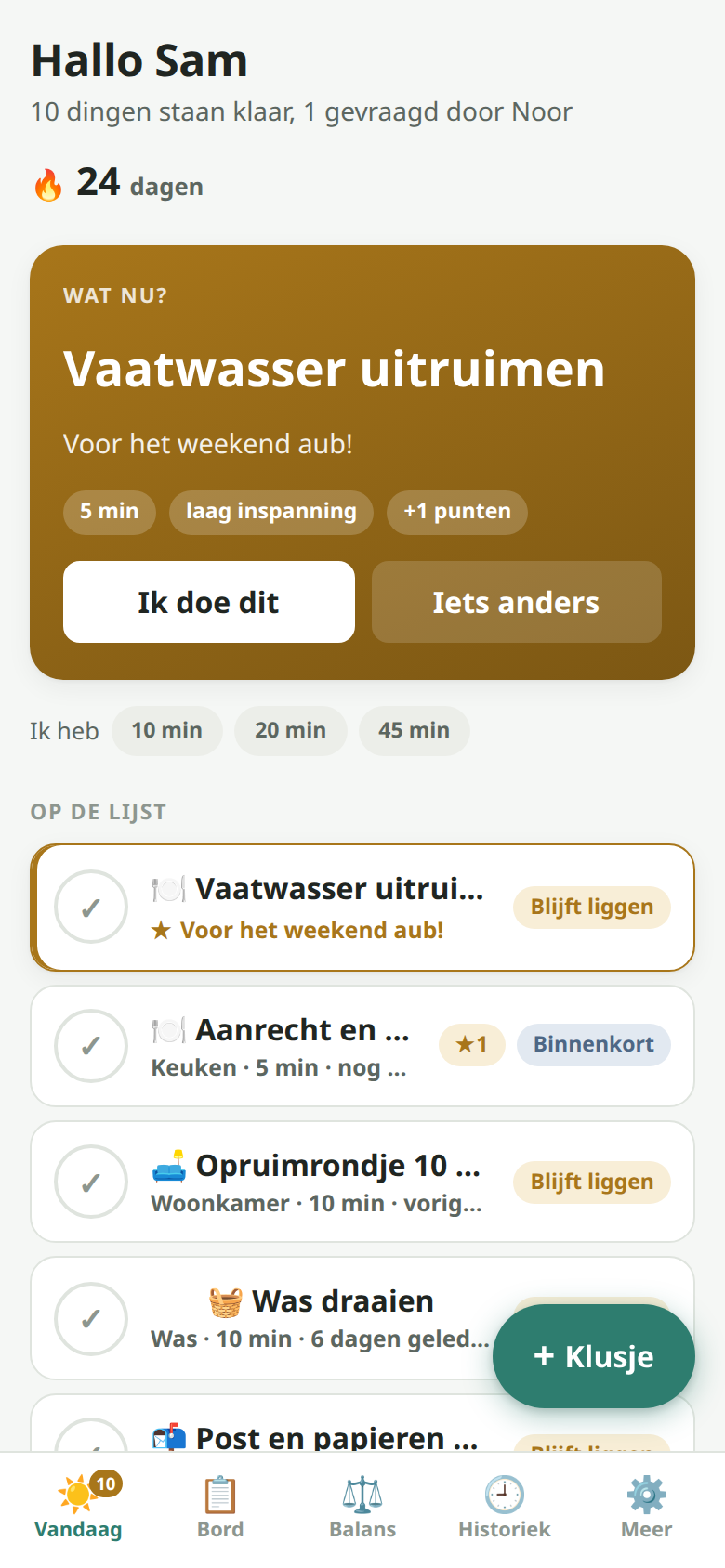
One button picks one chore, with a filter for "I have 10, 20 or 45 minutes". Choosing is a task too, and often the one that gets stuck.
Three priorities each
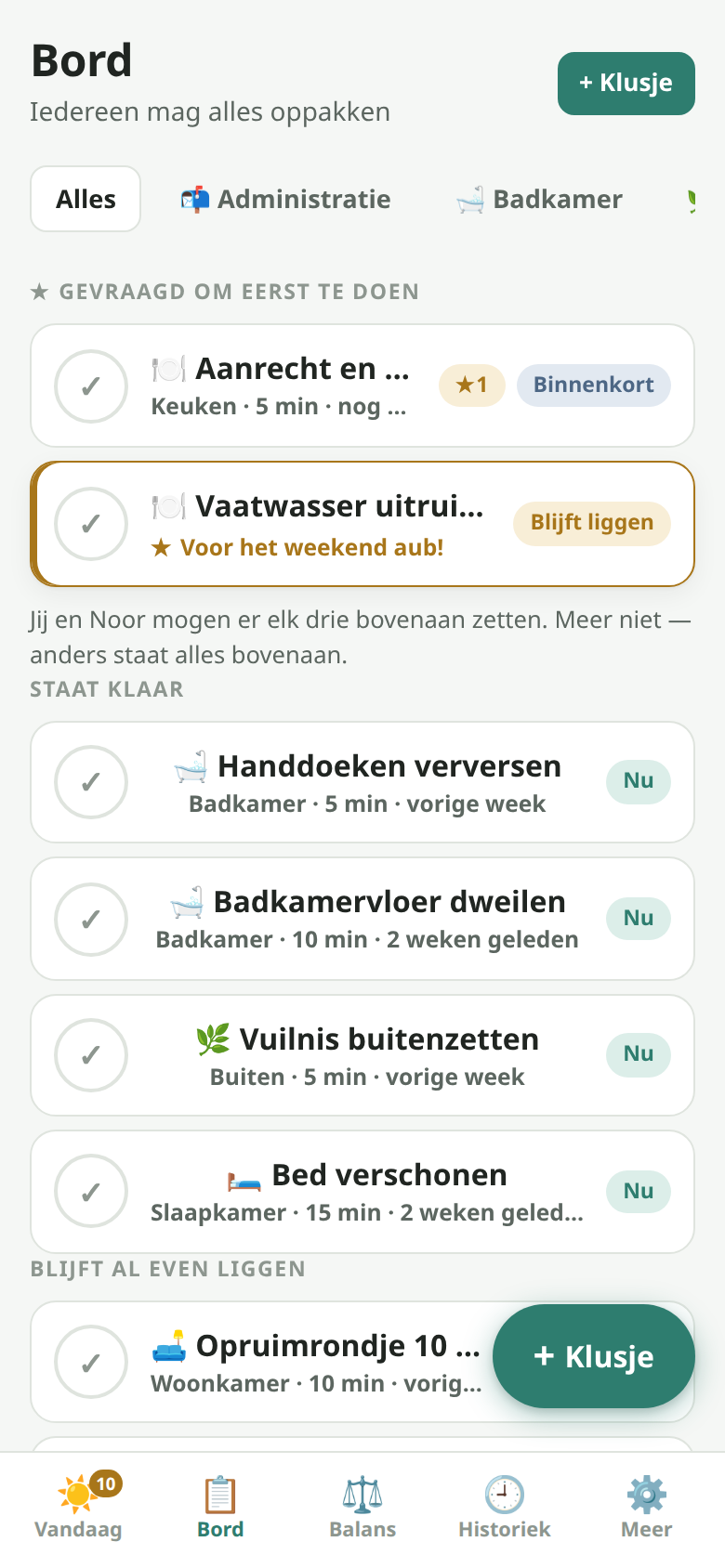
Each person can put three chores at the top, with a note. The other person's requests outrank everything else. The limit is the feature.
Points, streaks and a weekly race
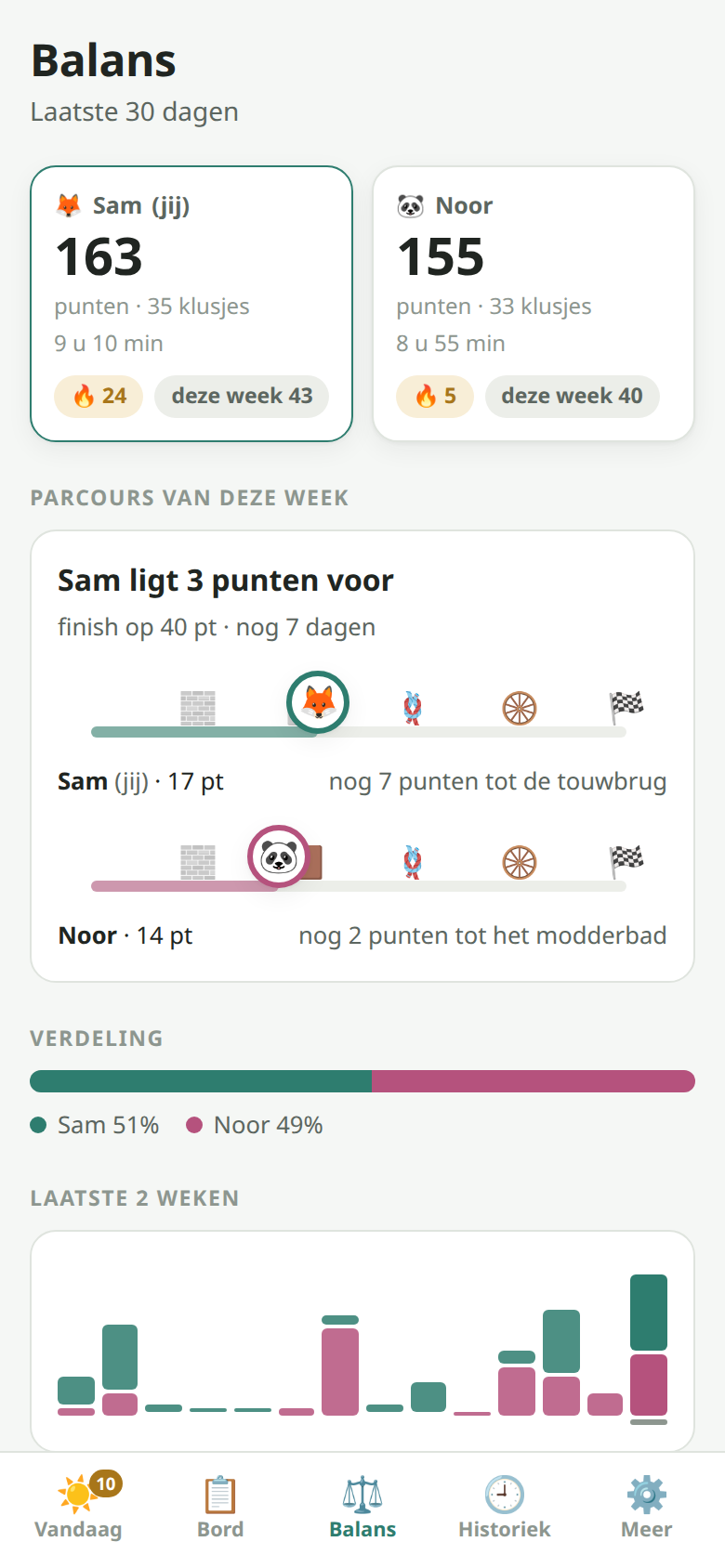
Points scale with how long and how unpleasant a chore is. Streaks survive a quiet day. Every Monday a new obstacle course starts, and each avatar moves towards the finish with every chore.
Fewer, better notifications
Two digests a day instead of a ping per chore. The only extra push is when the other person asks for something. There is also a calendar feed.
Try it
Runs entirely in your browser with made-up data. Nothing is sent anywhere.
The weekly parcours
Two made-up housemates race through this week's obstacle course. Tap a chore to log it: longer and heavier chores are worth more, exactly as in Klusjes. The track length comes from the household's own recent weeks.
Screens
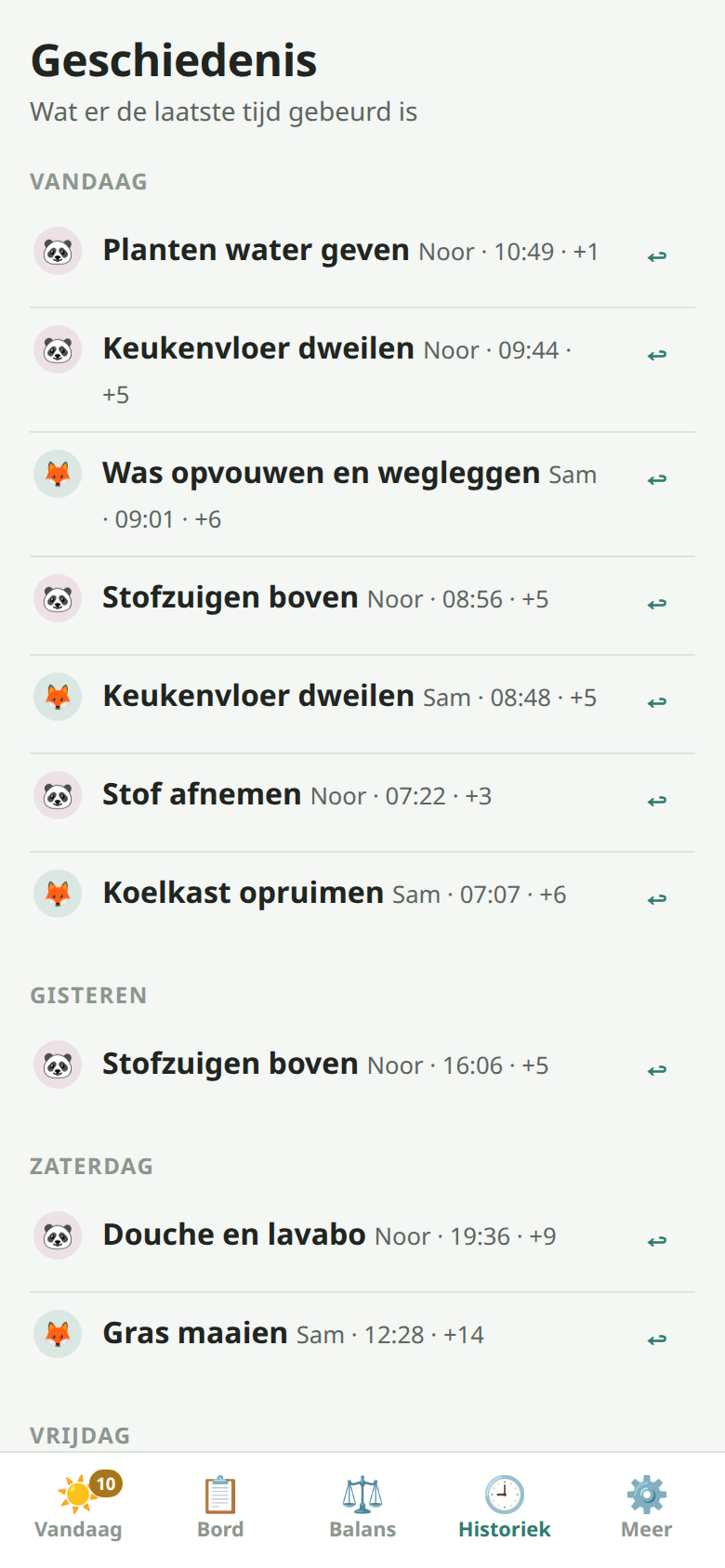
All screenshots use made-up demo data.
Architecture
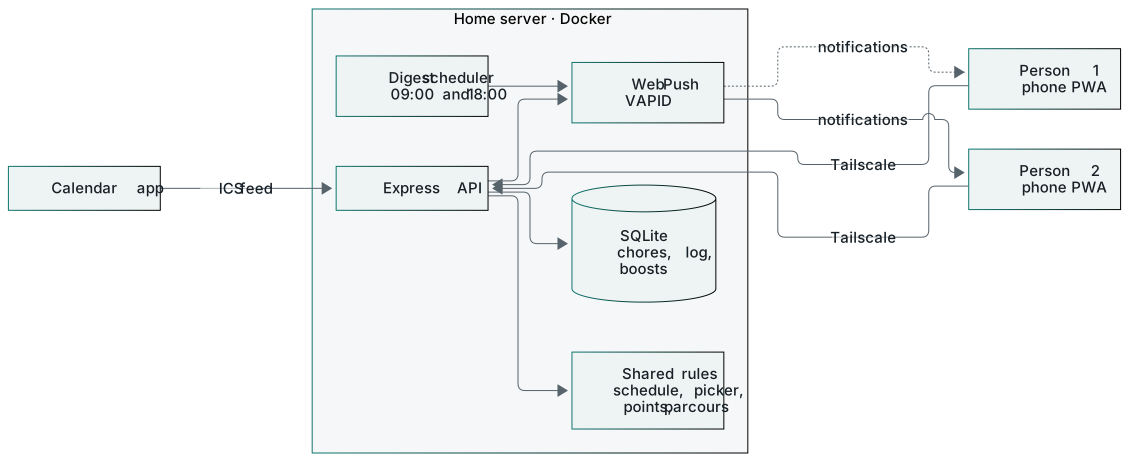
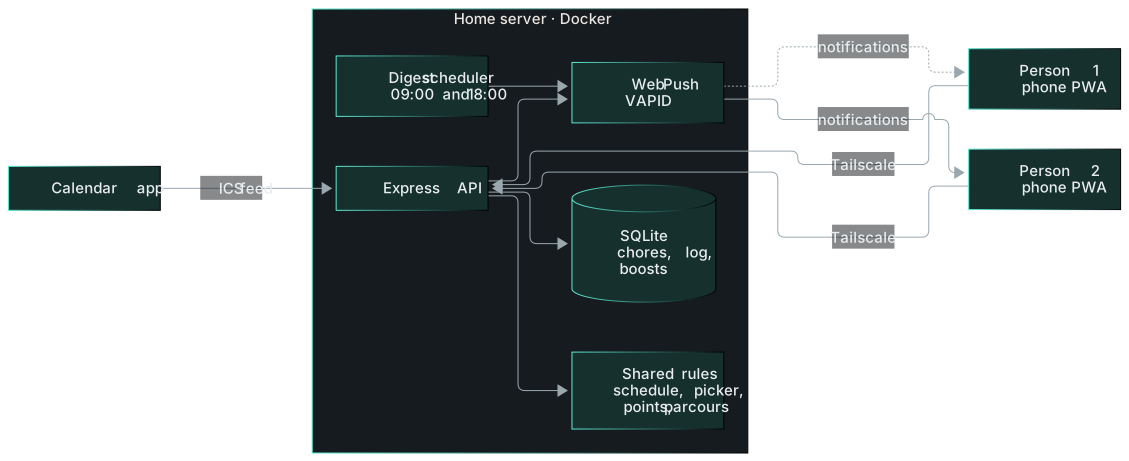
In words
Both phones run the same installable web app over a private Tailscale connection.
All logic that decides what is due, what to do next, how many points a chore is worth and how long this week's course is lives in one shared, tested module.
A small scheduler sends two notification digests a day using standard web push, with no third-party notification service.
How I built it
The hard part was adoption, not features. A wall of red overdue items turns an app into something you avoid, and scoring that counts ticks rewards whoever does the easy chores.
I designed every mechanic around one question, "Will we still open this in a month?". Points are weighted by effort so they feel fair. Streaks are forgiving so one bad day doesn't kill motivation. The weekly race resets, so falling behind is never permanent.
The code was written with Claude Code. I reviewed it, and the rules are covered by automated tests. It's the same approach I use with clients, applied at home. Design for the behaviour you want, then measure whether people keep using it.
Tech stack
- Frontend
- Backend
- Quality
- Hosting